When a home sells, it almost always comes down to three things: marketing, condition, and price. Marketing determines who sees your home. Price determines who can buy it. And condition determines how buyers feel when they walk through the door.
This article is about condition, but we’re not talking about repairs, maintenance, or “getting the house ready.” That’s the baseline. What we’re talking about is the elevated version of condition: staging—and why, if you’re serious about selling, it deserves serious consideration.
Staging Isn’t Decoration. It’s Strategy.
One of the biggest misconceptions we see—especially among experienced homeowners—is that staging is about taste. Or trends. Or making a home look “pretty.” It’s not. Staging is about reducing buyer hesitation and protecting price in a competitive market.
Think of it this way: Staging a home is like showing up to a job interview. You wouldn’t walk into a high-stakes interview wearing old, tattered sweatpants and say, “I think they’ll see my potential anyway.” You’d want to look put together, confident, and appropriate for the role—even if your résumé is excellent. A home is no different. The structure, location, and finishes may be strong. But presentation determines whether buyers feel confident moving forward—or whether they pause, second-guess, and keep looking.
Real Results: 58 Crested Cloud Case Study
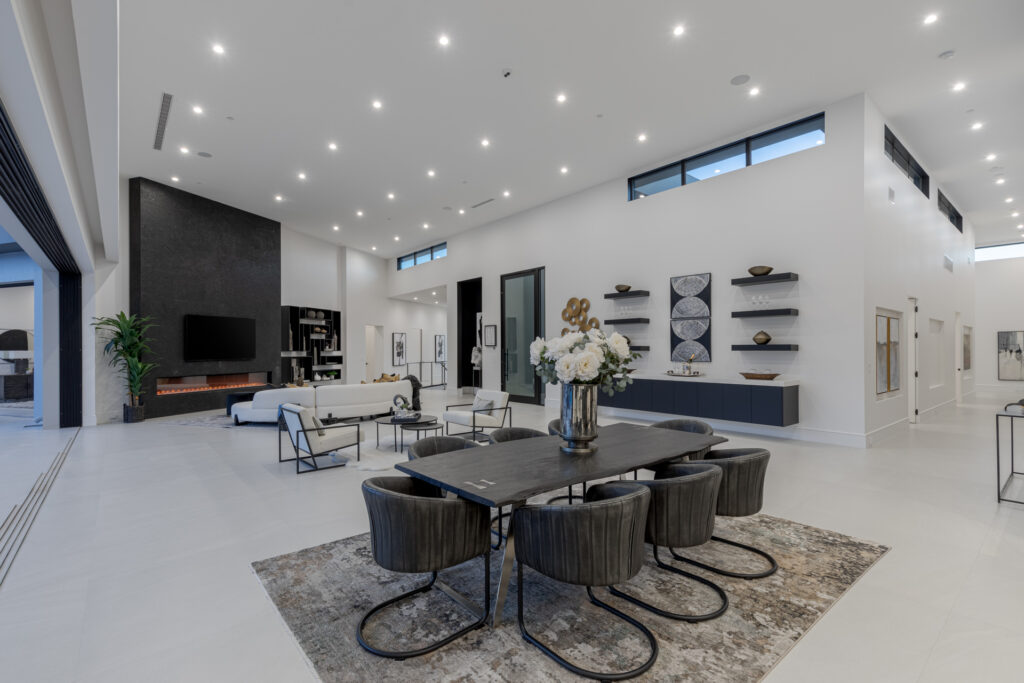
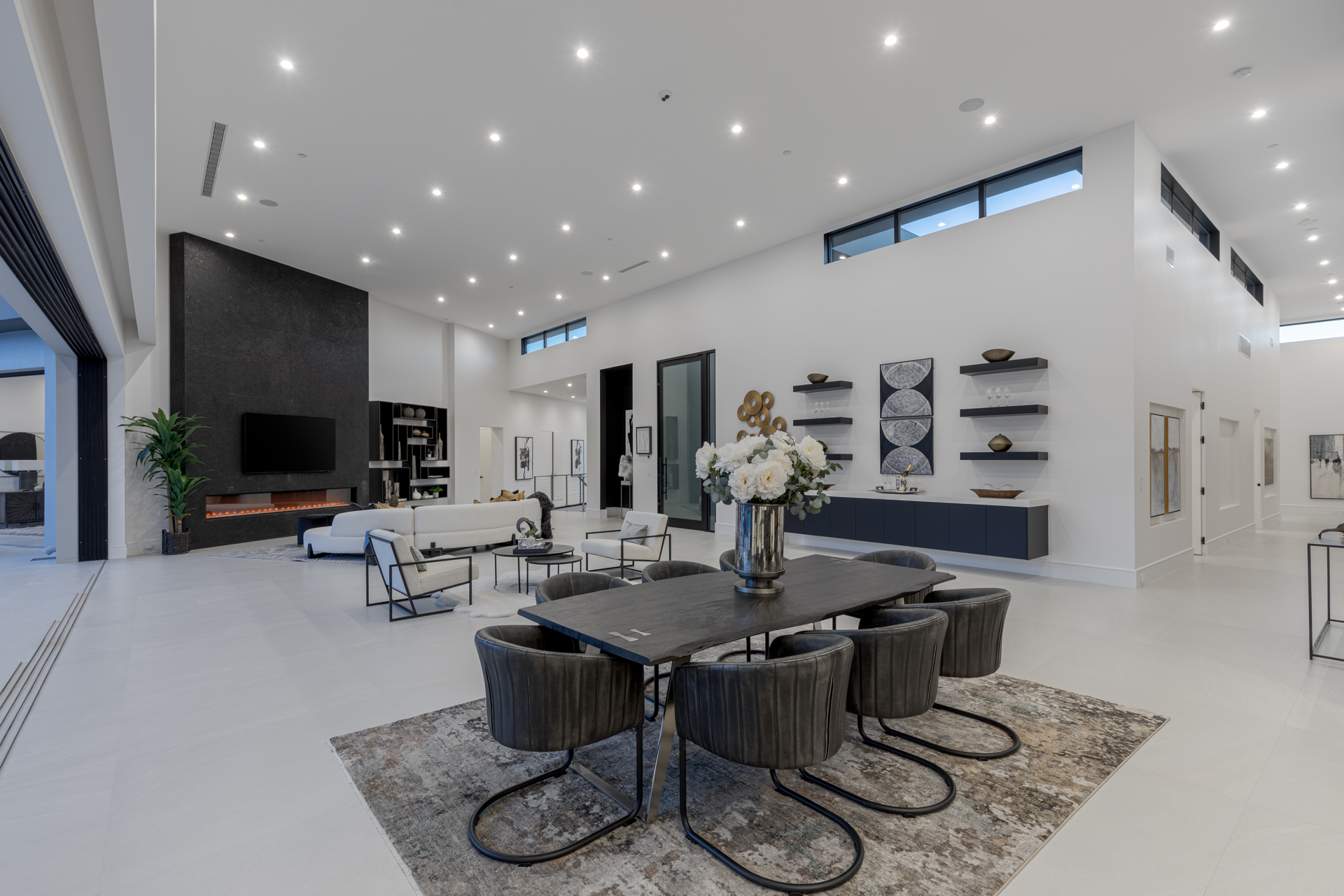
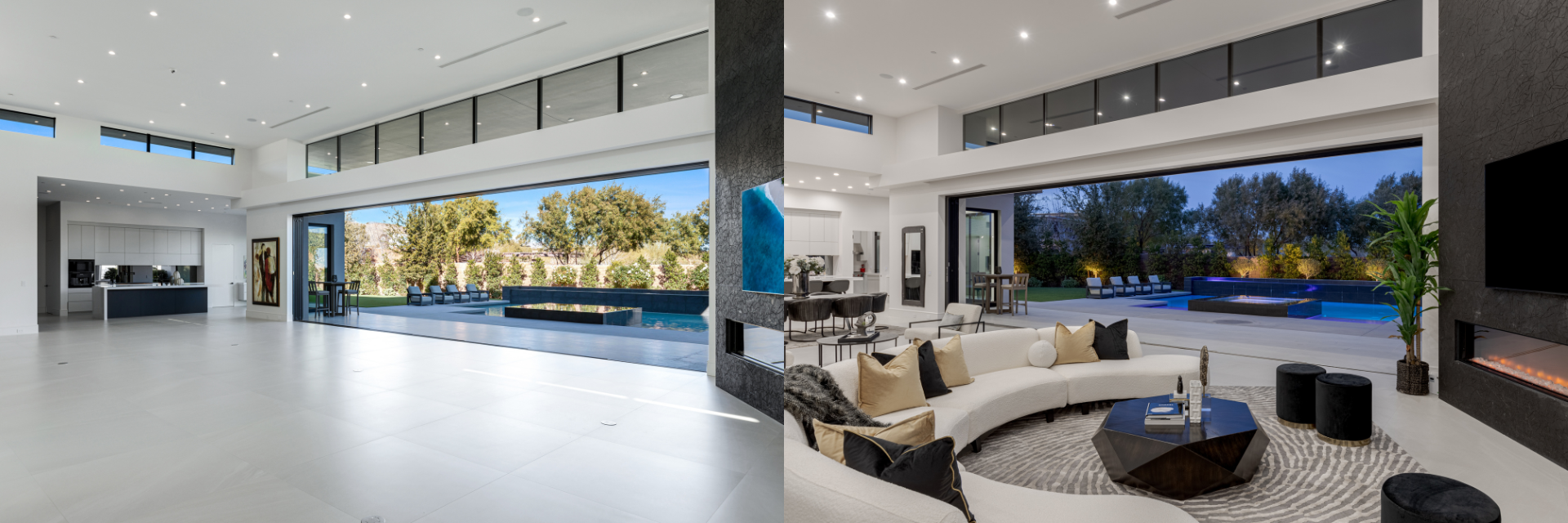
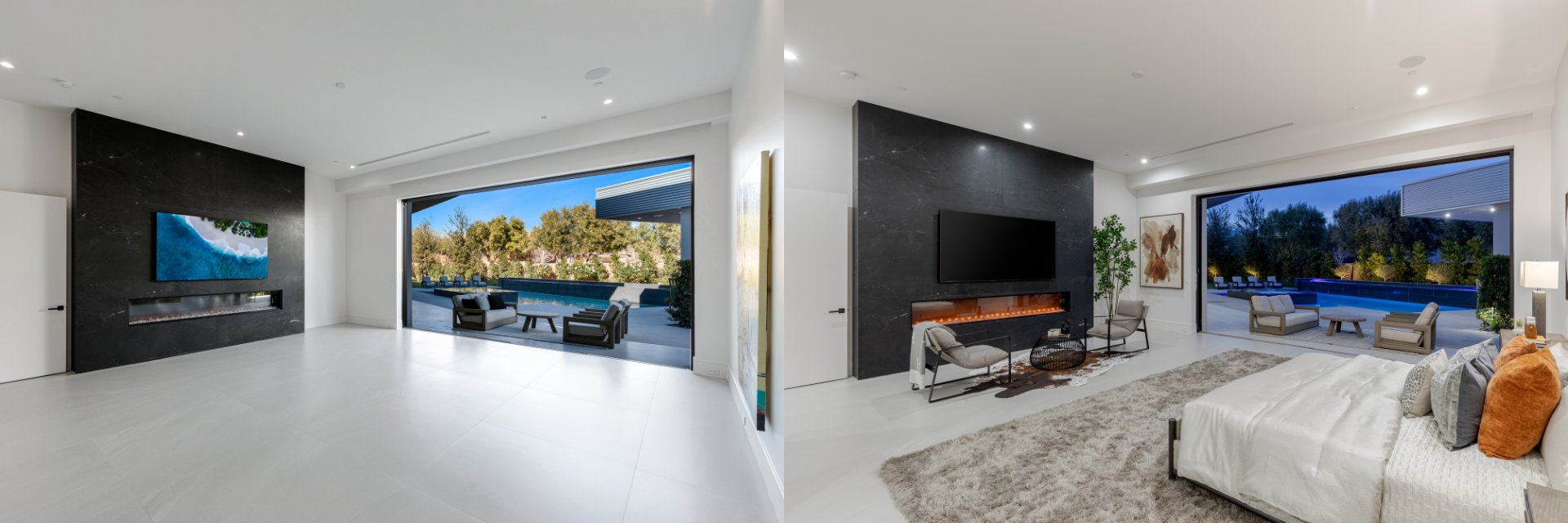
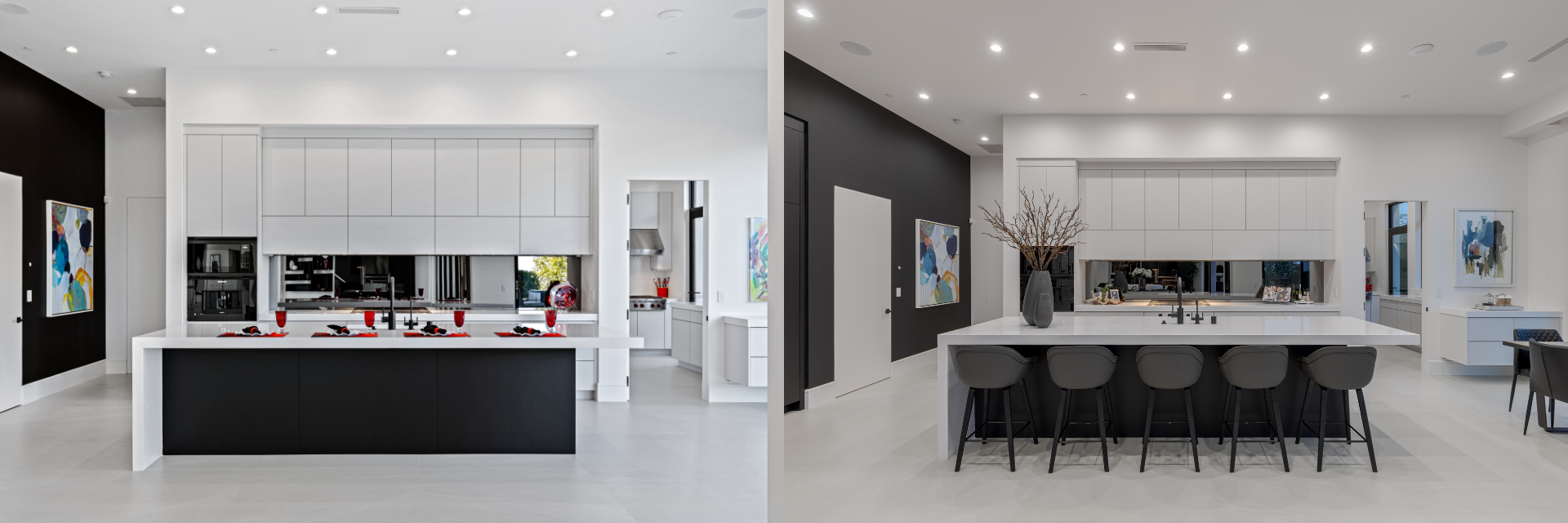
58 Crested Cloud is a 10,000+ square-foot luxury home with striking architecture and a bold black-and-white palette. While buyers admired the design, many struggled to envision daily life within the expansive open spaces. The home felt more like a gallery than a residence.
Rather than staging every room, a targeted staging approach was implemented—focusing on the great room, kitchen, dining area, primary suite, select art moments, and outdoor living areas. The impact was immediate. The home felt warmer, more livable, and easier to understand. Buyers who had previously toured returned; engagement increased; after relaunching with updated photography, the property received multiple offers and ultimately sold to a buyer who could clearly envision living there.
Modern Buyers Are Analytical—and Comparison-Driven
Today’s buyers are not browsing casually. They are: highly analytical, deep into online comparison before ever scheduling a showing, and constantly calibrating value across similar homes. By the time they walk through your front door, they’ve already seen dozens—sometimes hundreds—of homes online.
According to the National Association of Realtors, 83% of buyers’ agents say staging makes it easier for buyers to visualize a property as their future home, and 31% say staging makes buyers more willing to tour a home they first saw online. That matters—because in a market with options, clarity wins.
Why Empty Homes Create Hesitation (Especially at Higher Price Points)
When buyers walk into an empty home, they’re forced to do a lot of mental work on their own:
- How big does this room actually feel once furnished?
- Where does the furniture go?
- How do these spaces connect day-to-day?
- Does this home feel warm, livable, complete?
Most buyers—even very smart ones—are not good at this. The result is usually not rejection. It’s hesitation. And hesitation is what leads to longer days on market, softer offers, requests for concessions, and eventually, price reductions. At higher price points—particularly in guard-gated communities—buyers expect spaces to feel resolved. An empty home often reads as unfinished, regardless of how beautiful the remodel may be.
What Staging Actually Does (And Why It Works)
Staging consistently delivers value because it does three very specific things.
1. It Compresses Decision-Making Time
Staging helps buyers emotionally “land” in a home faster. When buyers immediately understand how spaces live—where furniture fits, how rooms function, how the home flows—they move from analysis to desire more quickly. This matters because faster emotional clarity correlates strongly with stronger pricing, fewer contingencies, and more confident offers—largely because buyers can process the space more easily. In simple terms: when a home is easier to understand, it feels more valuable.
2. It Protects the Price More Effectively Than a Reduction
One of the most common objections to staging is cost. And it’s a fair question. But here’s the reality we see repeatedly: A staging investment is often what prevents a far larger price reduction later. Once a home’s price is reduced, buyers interpret that reduction as leverage. Negotiations rarely stop at the first cut. Momentum shifts. Staging works upstream. It strengthens perceived value before the market forces a correction.
In fact, the National Association of Realtors reports that nearly 30% of agents say staging increases the dollar value offered by 1–10%, and nearly half say it reduces time on market. That’s not about decoration. That’s about positioning.
3. It Aligns the In-Person Experience With the Online Promise
Virtual staging can be a useful marketing tool—but it has limits. Today’s buyers form expectations online. When they arrive at a home that looks materially different in person, it creates a disconnect. That gap introduces uncertainty—and uncertainty kills momentum. Physical staging restores alignment between what buyers expect and what they experience. When expectation and reality match, buyers feel confident. And confidence is what leads to decisive offers.
This Isn’t About Style. It’s About Seriousness.
This is not an article about staging tips. It’s not about which sofa to choose or how many pillows belong on a bed. It’s about intent. If you’re serious about selling—about protecting price, minimizing friction, and positioning your home competitively—staging is not an indulgence. It’s a strategic decision. Just like professional photography. Just like thoughtful pricing. Just like strong marketing.
A Final Thought
Every seller wants their home to sell for the best possible price, in the shortest reasonable time, with the least amount of stress. Staging doesn’t guarantee that outcome, but it improves the odds. If you’d like to talk through whether staging makes sense for your home, your price point, and current market conditions, we’re always happy to offer guidance. Not every home needs the same approach, but every serious sale deserves a thoughtful one.